Industrial & Production Engineering

Program Overview

The Department of Industrial & Production Engineering was started during the year 1982 with a mission to produce the students of good management skill to cater the need of the advanced and globalized market which demand quality management people. The long journey of 39 years has seen satisfactory contributions to the society, nation and world. The alumni of this department has strong global presence making their alma mater proud in every sector they represent. The Department is having with qualified and dedicated faculties in various production and ergonomics discipline. The quality of teaching and training has yielded high growth rate of placement at various organizations. The faculty of the Department not only engage in teaching, also carry out research and have successfully supervise number of research scholars to get their Doctoral degrees.

Total Intake

40

Program Type

UG

Duration

4 Years

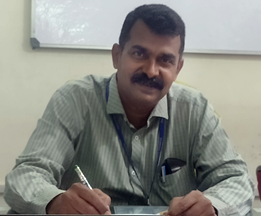
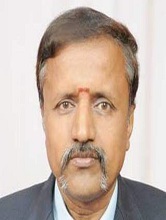
Dr. N L Murali krishna

Professor & HOD
Industrial & Production Engg. Department
PESCE, Mandya.

Vision

"Contribute to achieve and pursue academic excellence for imparting quality education in I & P Engineering and to carry out the research activity on continuous basis to develop competent and social responsible engineers and managers."

Mission

The Department of Industrial and Production Engineering is committed to

  • M1: To educate them in the fundamental concept, knowledge, skills in theory and practices.
  • M2: To prepare them through skilled programmes for better Employment as engineers and managers or pursuit of advanced degrees in Industrial, Production and Mechanical Engineering fields.
  • M3: To inculcate qualities of communication skills, professional personality and ethical values to make them the responsible and competent professionals.

Program Educational Objectives (PEOs)

Graduates of the program will be able to

  • PEO1: Industrial and Production Engineering program will prepare graduates who will have the ability to apply the principles and techniques of traditional and modern quantitative, qualitative analysis, synthesis and effectively interpret, evaluate, select, and communicate the desired alternative in both manufacturing and service industries.
  • PEO2: Industrial and Production Engineering program will prepare its graduates who will possess the required engineering competence in industrial engineering, production engineering and managerial skills.
  • PEO3: Industrial and Production Engineering program will prepare graduates, who possess communication skills, professional personality and ethical values as responsible and competent entrepreneur and professionals.

The consistency of PEOs with the Mission of the department.

PEO Statements Mission 1
Knowledge and skills
Mission 2
Employment / Higher Education
Mission 3
Professional Ethics
PEO1: Industrial and Production Engineering program will prepare graduates who will have the ability to apply the principles and techniques of traditional and modern quantitative, qualitative analysis, synthesis and effectively interpret, evaluate, select, and communicate the desired alternative in both manufacturing and service industries. 3 2 1
PEO2: Industrial and Production Engineering program will prepare its graduates who will possess the required engineering competence in industrial engineering, production engineering and managerial skills. 2 3 1
PEO3: Industrial and Production Engineering program will prepare graduates, who possess communication skills, professional personality and ethical values as responsible and competent entrepreneurs and professionals. 1 2 3

Program Outcomes (POs)

Engineering Graduates will be able to

  • PO1: Engineering Knowledge: Apply knowledge of mathematics, natural science, computing, engineering fundamentals and an engineering specialization as specified in WK1 to WK4 respectively to develop to the solution of complex engineering problems.
  • PO2: Problem Analysis: Identify, formulate, review research literature and analyze complex engineering problems reaching substantiated conclusions with consideration for sustainable development. (WK1 to WK4)
  • PO3: Design/Development of Solutions: Design creative solutions for complex engineering problems and design/develop systems/components/processes to meet identified needs with consideration for the public health and safety, whole-life cost, net zero carbon, culture, society and environment as required. (WK5)
  • PO4: Conduct Investigations of Complex Problems: Conduct investigations of complex engineering problems using research-based knowledge including design of experiments, modelling, analysis & interpretation of data to provide valid conclusions. (WK8).
  • PO5: Engineering Tool Usage: Create, select and apply appropriate techniques, resources and modern engineering & IT tools, including prediction and modelling recognizing their limitations to solve complex engineering problems. (WK2 and WK6)
  • PO6: The Engineer and The World: Analyze and evaluate societal and environmental aspects while solving complex engineering problems for its impact on sustainability with reference to economy, health, safety, legal framework, culture and environment. (WK1, WK5, and WK7).
  • PO7: Ethics: Apply ethical principles and commit to professional ethics, human values, diversity and inclusion; adhere to national & international laws. (WK9)
  • PO8: Individual and Collaborative Team work: Function effectively as an individual, and as a member or leader in diverse/multi-disciplinary teams.
  • PO9: Communication: Communicate effectively and inclusively within the engineering community and society at large, such as being able to comprehend and write effective reports and design documentation, make effective presentations considering cultural, language, and learning differences
  • PO10: Project Management and Finance: Apply knowledge and understanding of engineering management principles and economic decision-making and apply these to one’s own work, as a member and leader in a team, and to manage projects and in multidisciplinary environments.
  • PO11: Life-Long Learning: Recognize the need for, and have the preparation and ability for i) independent and life-long learning
    ii) adaptability to new and emerging technologies and
    iii) critical thinking in the broadest context of technological change. (WK8)

Knowledge & Attitude Profiles - Wks

Annexure I: Knowledge and Attitude Profile (WK)

  • WK1: Natural Sciences and Social Sciences: A systematic, theory-based understanding of the natural sciences applicable to the discipline and awareness of relevant social sciences.
  • WK2: Mathematics, Numerical Analysis and Computing: Conceptually-based mathematics, numerical analysis, data analysis, statistics and formal aspects of computer and information science to support detailed analysis and modelling applicable to the discipline.
  • WK3: Engineering Fundamentals: A systematic, theory-based formulation of engineering fundamentals required in the engineering discipline.
  • WK4: Engineering Specialist Knowledge: Engineering specialist knowledge that provides theoretical frameworks and bodies of knowledge for the accepted practice areas in the engineering discipline; much is at the forefront of the discipline.
  • WK5: Engineering Design and Sustainability: Knowledge, including efficient resource use, environmental impacts, whole-life cost, reuse of resources, net zero carbon, and similar concepts, that supports engineering design and operations in a practice area.
  • WK6: Engineering Practice and Technology: Knowledge of engineering practice and technology in the practice areas within the engineering discipline.
  • WK7: Engineering and Society: Knowledge of the role of engineering in society and identified issues in engineering practice in the discipline, such as the professional responsibility of an engineer to public safety and sustainable development.
  • WK8: Research and Critical Thinking: Engagement with selected knowledge in the current research literature of the discipline, awareness of the power of critical thinking and creative approaches to evaluate emerging issues.
  • WK9: Ethics and Inclusive Practice: Ethics, inclusive behavior and conduct. Knowledge of professional ethics, responsibilities, and norms of engineering practice. Awareness of the need for diversity by reason of ethnicity, gender, age, physical ability, etc., with mutual understanding and respect, and of inclusive attitudes.

Program Specific Outcomes (PSOs)

Industrial and Production Engineering Graduates will be able to

  • PSO1: Industrial & Production engineering graduates will be able to apply the knowledge acquired in the program about materials and finishing process
  • PSO2: Industrial & Production engineering graduates will be able to design product based on Ergonomic Principles

Name of Technical Staff Designation Qualification Work Experience (Yrs.)
K. Ravi Forman DME (DTE) 36 Years
Kirankumar K Instructor B.E. 1 Year
Shivamahadevaiah K C Mechanic SSLC 28 Years
Sendhil Kumar Mechanic PUC 21 Years
Mahesh Kumar H K Mechanic ITI 2 Years
Rama Krishnaiah Helper SSLC 33 Years
Gowri Clerk with Computer Application MA 10 Years
Santhosh C Helper MA 8 Years
Chandrashekar S N Helper ITI 6 Years
Adharsh M V Helper PUC 4 Years
2020-21 Student List Click Here

2019-20 Student ListClick Here

2018-19 Student ListClick Here

USN Name Company
4PS17IP008 Chidambar D R PCS Technologies
4PS17IP012 Krupa K A Accenture
4PS17IP027 Sachin H Biradar Infosys
4PS17IP032 Sushanth H U Cognizant
4PS17IP0410 Sanjay K Cognizant
4PS17IP033 Varun M TCS Ninja
4PS17IP001 Akash Yadav Supreme Industries
4PS17IP003 Bhavan Kumar J Supreme Industries
4PS17IP028 Sanman M R Gowda Supreme Industries
4PS17IP010 Gowtham CK Zelfstudie
4PS18IP412 Siddaramu P Automotive Axles
4PS17IP014 LR Vinay Kumar Infosys

USN Name Company
4PS16IP001 ChandanB.k Infosys, Mysuru
4PS16IP002 Abhishek S R Suprajit Engineering limited
4PS16IP009 Fabin Jenisha J Accenture, Bengaluru
4PS16IP011 Karthik .M Accenture, Bengaluru
4PS16IP013 KumariS.k Infosys
4PS16IP014 Madhu M Accenture, Bengaluru
4PS16IP017 Nithesh H R Amazon
4PS16IP018 Parashivamurthy K M Accenture, Bengaluru
4PS16IP019 Pavangowda HCL
4PS16IP022 Poornima Accenture, Bengaluru
4PS16IP026 Rakesh .J DXC
4PS16IP030 Sujanashraya.S TCS
4PS16IP034 Swaroop T.R TCS
4PS16IP407 Sunil kumar PERSOLKELLY
4PS16IP032 Sunitha Mallikarjun Nalatwad Accenture, Bangalore
4PS17IP406 Sachin .R CYIENT DLM
4PS17IP402 Manoj v Treveni gears
4PS16IP004 Aditya K M TCS, Bangalore
4PS17IP404 Pavan K R KPMJ
4PS16IP010 Hemanth Kumar Percoyo
4PS16IP005 Ajay K Mavatkar INFORMAZE
4PS16IP033 Syed Abdul Rasheed AL NUKHBA LLC

Name of the Research Guide Phone Number Email-Id
Dr. H M Nanjundaswamy 8310181951 hmnanjundaswamy@pesce.ac.in
Dr. N L Muralikrishna 9844009400 nlmuralikrishna@pesce.ac.in
Dr. B S Shivakumara 8861020652 bsshivakumara@pesce.ac.in
Dr. Raghu S 9980468676 raghus@pesce.ac.in

Name Guide Name Title of Research Date of Final Viva Completed
Dr. H M Nanjundaswamy Mudakappanavar V S Effect of External Parameters on the Structure and Properties of Aluminium Alloy Castings 2016
Tataram K Chavan Dr. H M NanjundaswamyL Comparative Study of Effect of Fly Ash and Other Additives on Mould Properties 2017
C S Anand Dr. H M NanjundaswamyL rogramme Management Techniques of Advanced Fighter Aircraft Development 2019
Raghu S Dr. H M NanjundaswamyL Effect of Various Sizes of Nano TiO2 Particles Reinforced with Aluminum on Mechanical and Wear Behaviour. 2019

Name Guide Name University/Research Center Topic Status
M Sreenivasa Dr. Batluri Tilak Chandra / Dr. H M Nanjundaswamy Sri Siddhartha Academy of Higher Education, Tumkur. / SSIT, Tumkur Coursework Completed
Bharath M S Dr. B R Narendra Babu VTU, Belagavi/ Vidya Vikas Institute of Engineering and Technology, Mysuru. Course Work in Progress

Research Scholar Title Status
Chikdevegowdru Synthesis of Aluminium Based Composites and their Characterization like Mechanical Properties, Fracture Toughness and Tribological Behaviour Comprehensive Viva Completed
Harish Experimental Investigation of Mechanical Properties and Characteristics of Friction Stir Welded Dissimilar Alloys Comprehensive Viva Completed
Rattan Kumar Investigations on tribological behavior and machinability characteristics of aluminium based hybrid metal matrix composite Course work completed Preparing for Comprehensive Viva
Harish Experimental Investigation of Mechanical Properties and Characteristics of Friction Stir Welded Dissimilar Alloys Comprehensive Viva Completed
Manuprasad Synthesize and Characterization of Magnesium based Nanocomposite Preparing for Course Work
Sandeep M P Surface to Air Metal Detection and Detonation for Aircrafts and Missile Systems Comprehensive Viva Completed
Sachin N K Investigation on Quality of Welding Process Used for making Truck Drive Axles with Respect to Poka Yoka and Reliability Methods in Indian Manufacturing Industries Comprehensive Viva Completed

Name International / National Journal International / National Conference Total
Dr. H M Nanjundaswamy 13 10 23
Dr. N L Muralikrishna 10 17 27
Mr. M A Venugopala 1 1
Mr. M. Sreenivasa 4 6 10
Dr. B S Shivakumaraa 9 8 17
Dr. Raghu S 5 6 11
Mr. Sujana N 2 1 3
Yathish M K 3 2 5

Project Title Year Funding Agency Amount (Rs.) Status
- 2018 Empowerment and Equity Opportunities for Excellence in Science 35,50,000.00 Applied
- 2018 Teachers Associateship for Research Excellence (TARE) 38,95,000.00 Applied
Departmental Achievements Click Here
Faculty Achievements Click Here
Students Achievements Click Here
2020-2021 ACTIVITES Click Here
2019-2020 ACTIVITES Click Here
2018-2019 ACTIVITIES Click Here

Physical Infrastructure

Department Buildings and Laboratories

The building consists of Head's chamber, office room, three class rooms, two staff rooms, five laboratory halls, project room, ladies waiting room, 80 seater seminar hall and departmental library.

The total building space is 1422 square meters.

Ground Floor 412 SqMts
First Floor 412 SqMts
Second Floor 215.59 SqMts
Total 1029.59 SqMts

The various laboratories in the department are as follows:

Laboratory Semester
Metrology Laboratory III Sem
Computer Aided Drafting and Geometric Modelling Laboratory V Sem
Skill Oriented Laboratory-I and II (Advanced Geometric Modelling –I and II) V Sem and IV Sem
Industrial Engineering Lab Laboratory VI Sem
Computer Aided Analysis Laboratory VI Sem
CNC & Robotics Laboratory VII Sem
Machine Tool Testing and Design Laboratory VII Sem

Utilities

HOD Room 24.05 SqMts
Faculty space 74.4 SqMts
Laboratory Space 208.2 SqMts
Students Space 205.7 SqMts
Experiential Learning Space 63.2 SqMts
Dept. Library and Office Space 24.05 SqMts
Seminar Hall Space 102.5 SqMts
Total 702.1 SqMts

Total number of Computers:28 Nos.

Application software for laboratories:

  • Solid Works
  • Mastercam
  • Technomatic (Manufacturing Process Simulation Software)

Major equipments:

  • Profile projector
  • Tool makers microscope
  • Autocollimator
  • Roundness measuring machine
  • Metallurgical Microscope
  • Height master
  • Computer Systems with latest software
  • ECG/TMT Machine
  • EMG/NCV Machine
  • Ambulatory ECG Recorder
  • Surface Roughness Tester
  • Ultrasonic Flaw Detector
  • Vision Measuring Instrument